
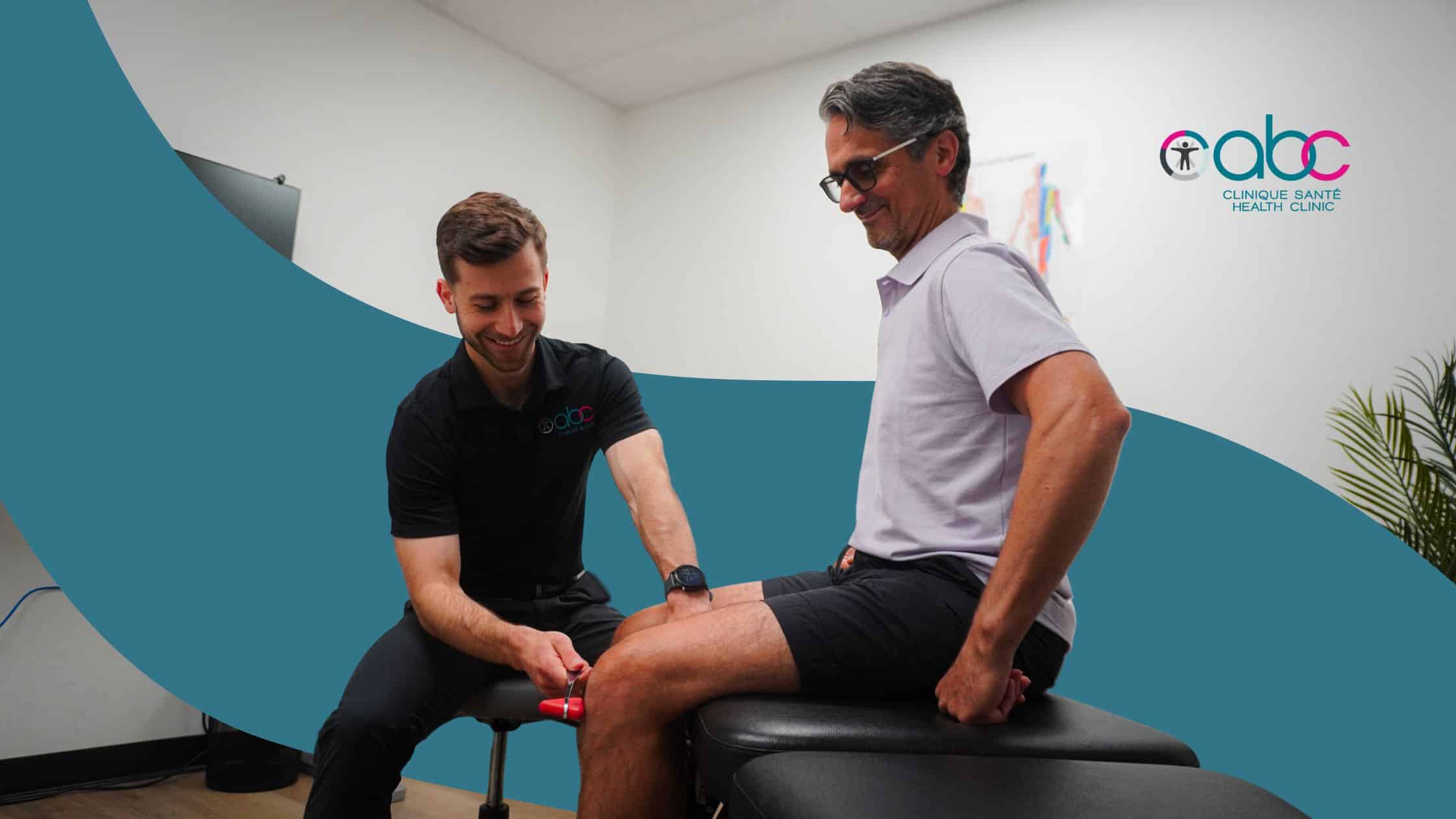
A diagnosis of knee osteoarthritis can be worrying. Many patients leave with the impression that their knee is “worn out,” that they should avoid moving too much, and that there is not much that can be done. However, several common beliefs surrounding osteoarthritis do not hold up scientifically. Here are some reassuring truths on the subject:
1- X-ray ≠ pain
The severity of osteoarthritis seen on an X-ray does not necessarily predict the pain felt. Some people with significant “degenerative” changes on an X-ray have little or no pain, while others with few changes may suffer more. We now distinguish between radiographic osteoarthritis and clinical osteoarthritis.
2- Pain does not mean damage
Another commonly held belief is that “if an activity causes pain, it may further damage the joint.” “ In reality, pain does not mean that the joint is deteriorating further. It is often a hypersensitivity of the tissue and/or nervous system, not a sign of destruction. In other words, osteoarthritis can make you a little more sensitive, but sensitive does not necessarily mean ‘damaged’ or ”fragile.”
3- The symptoms are reversible
It is true that the changes visible on imaging are permanent. But the symptoms themselves can improve greatly. With appropriate care, many patients regain a good quality of life, less pain, and better mobility.
4- Physical activity is beneficial
Contrary to what one might think, movement is essential. Cartilage acts like a sponge: it needs compression to nourish itself properly. Exercise also helps strengthen the muscles around the knee, improve mobility, and reduce pain. It is also very important to include strengthening and power exercises when suffering from osteoarthritis.
In summary: a diagnosis of osteoarthritis is not a death sentence. With the right strategies—movement, adapted exercises, and personalized support—it is entirely possible to regain control of your joint health.
Have you been diagnosed with osteoarthritis or do you think you may have it? Talk to one of our chiropractors or physical therapists. A proactive approach can make all the difference.
PS: Yes, chiropractors have the training and expertise to diagnose and treat osteoarthritis in the knee, back, and other joints of the body. They can even equip you early in life to prevent its future repercussions.
Feel free to share this content with a loved one who might benefit from it.
Visit the clinic nearest you:
-

Dr Charles Bélanger
Chiropractor and owner