
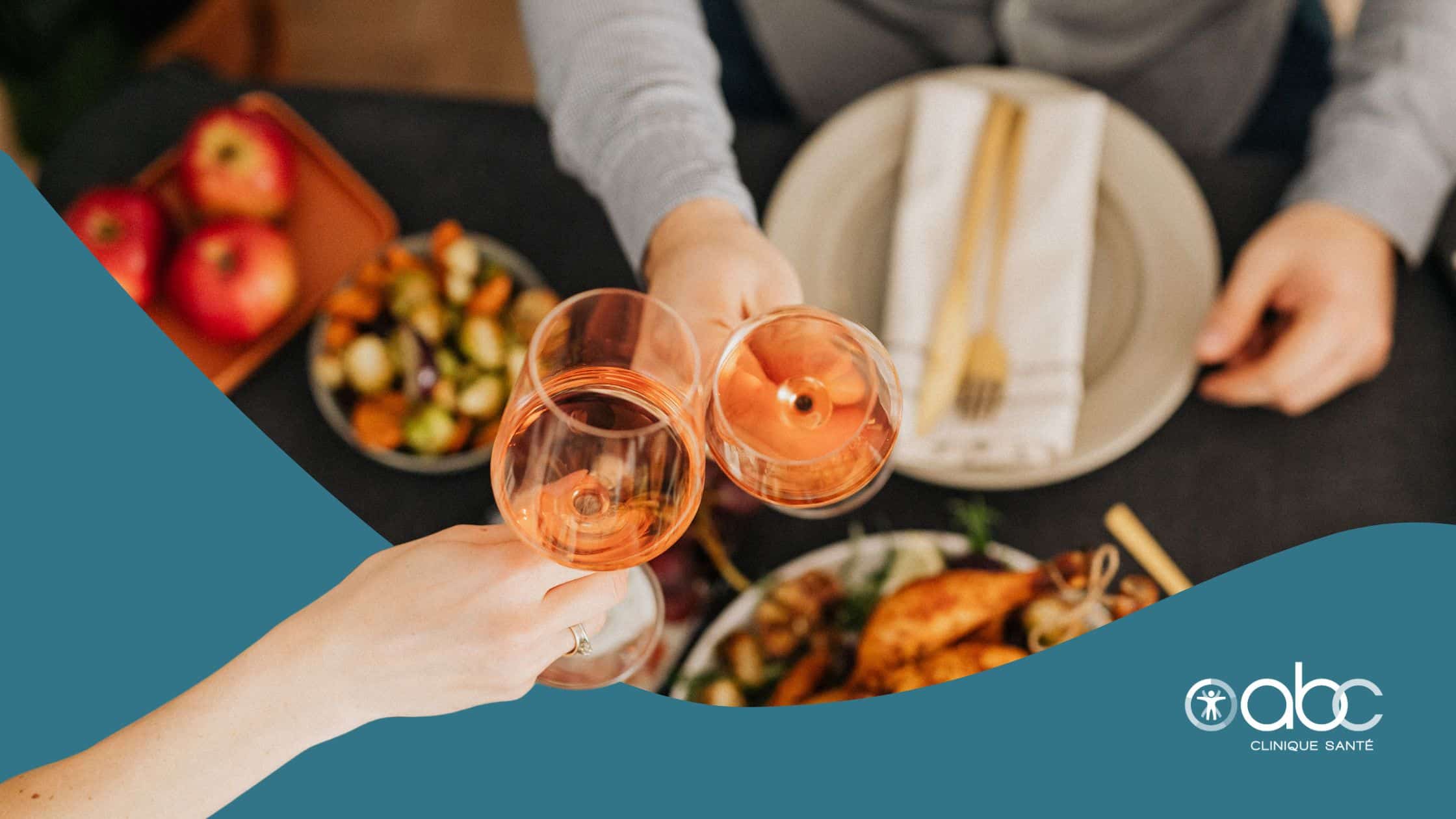
The holiday season is often associated with large meals, culinary traditions, and a completely disrupted eating routine. Between family invitations, classic gourmet dishes, and the pressure to look good, it’s easy to fall into behaviors that detract from the pleasure of eating and maintaining balance. Here are some mistakes to avoid so you can enjoy a more peaceful, balanced holiday season that respects your body.
1. Arriving at family dinners on an empty stomach
Many people reduce their food intake before a big meal to “save calories.” In reality, arriving hungry increases the risk of overeating, because you eat faster and are less aware of your satiety signals.
Practical tip
Eat normally for the rest of the day and plan a filling snack 1 to 2 hours before the meal (Greek yogurt, nuts, fruit and cheese, etc.). A stable appetite leads to more conscious choices… and more enjoyment.
2. Commenting on other people’s appearance or weight
Even when the intention is positive, comments about weight, figure, or appearance can be hurtful.
A compliment such as “You’ve lost weight, well done!” can imply that the person was “worth less” before.
Relationships with our bodies and food are personal, sensitive, and unique. During the holiday season, the atmosphere is all the more enjoyable when everyone can be themselves without judgment.
3. Denying yourself foods you really enjoy
Festive foods—Yule logs, meat pies, cranberries, decorated cookies—are often only available once a year. Denying yourself these foods creates frustration and can lead to compulsive eating later on.
Key principle
It’s better to eat a small portion of a food you really love, then stop when you’re satisfied, rather than thinking about it for days and ultimately overeating.
4. Forcing yourself to eat “out of tradition”
The opposite is also true: if you don’t like a festive food, there’s no obligation to eat it “to please others.”
Listening to your internal signals remains the most reliable tool for a peaceful relationship with food.
And the good news is that there’s nothing stopping you from making gingerbread cookies again… in March.
5. Falling into the “all or nothing” trap
“I’ve already been eating poorly this week, so I might as well continue until New Year’s.”
This logic is common, yet counterproductive. It places meals in a rigid opposition: perfect or catastrophic.
Remembering that each meal is a separate occasion allows you to maintain flexible, realistic habits that respect your needs, without punishment or extreme restrictions.
6. Viewing the holiday season as an uncontrollable period
Ultimately, the holiday season often represents 4 to 5 special meals over two weeks, or about 12% of meals during that period.
This means that 88% of the remaining occasions allow you to maintain satisfactory habits without striving for perfection.
Putting things into perspective reduces pressure and allows you to enjoy festive meals for what they are: exceptional moments, not threats to your balance.
Enjoy the moment
The holiday season is above all a time to get together, savor, and share. By avoiding these few pitfalls, it becomes easier to honor traditions, listen to your body, and fully enjoy meals without pressure or guilt. A gentle balance that leaves more room for pleasure… and beautiful moments with family.
Consult a nutritionist
-

Jasmine Brousseau
Registered Dietitian