
Pain that starts in the lower back and radiates down into the buttock or leg can quickly become a cause for concern. People often think of just one thing: the sciatic nerve. However, pain that radiates down the leg isn’t necessarily caused by the sciatic nerve.
Several structures can be responsible for this type of pain. So, how can you tell what’s really going on?
What is the sciatic nerve?
The sciatic nerve is the largest nerve in the human body. It originates at the base of the spine and runs down through the buttock, thigh, calf, and all the way to the foot. When a nerve root is irritated, the symptoms may differ from those of simple muscle pain.
Actual irritation of the nerve can cause, among other things:
- numbness;
- tingling;
- a burning sensation;
- electric shocks;
- weakness in the leg or foot.
These symptoms may sometimes be accompanied by pain that radiates down the leg.
Why can the sciatic nerve become irritated?
Several conditions can irritate a nerve root in the lower back. Among the most common are herniated discs and spinal stenosis.
Herniated Disc
There is a disc between each vertebra. This disc acts as a shock absorber and helps cushion impacts when we walk, run, or move. Over time, certain areas of the disc can become more fragile. In some cases, part of the disc’s contents may then protrude through this weakened area. This is called a herniated disc. When a herniated disc comes into contact with a nerve root, it can cause irritation. This irritation may be due to inflammation, mechanical pressure, or both.
The word “herniated” can be alarming. However, the presence of a herniated disc on an MRI does not necessarily mean it is causing your pain. Some people have herniated discs without experiencing any symptoms at all. It’s also normal to see certain changes in the spine as you age. These changes can be present without causing pain or limiting daily activities.
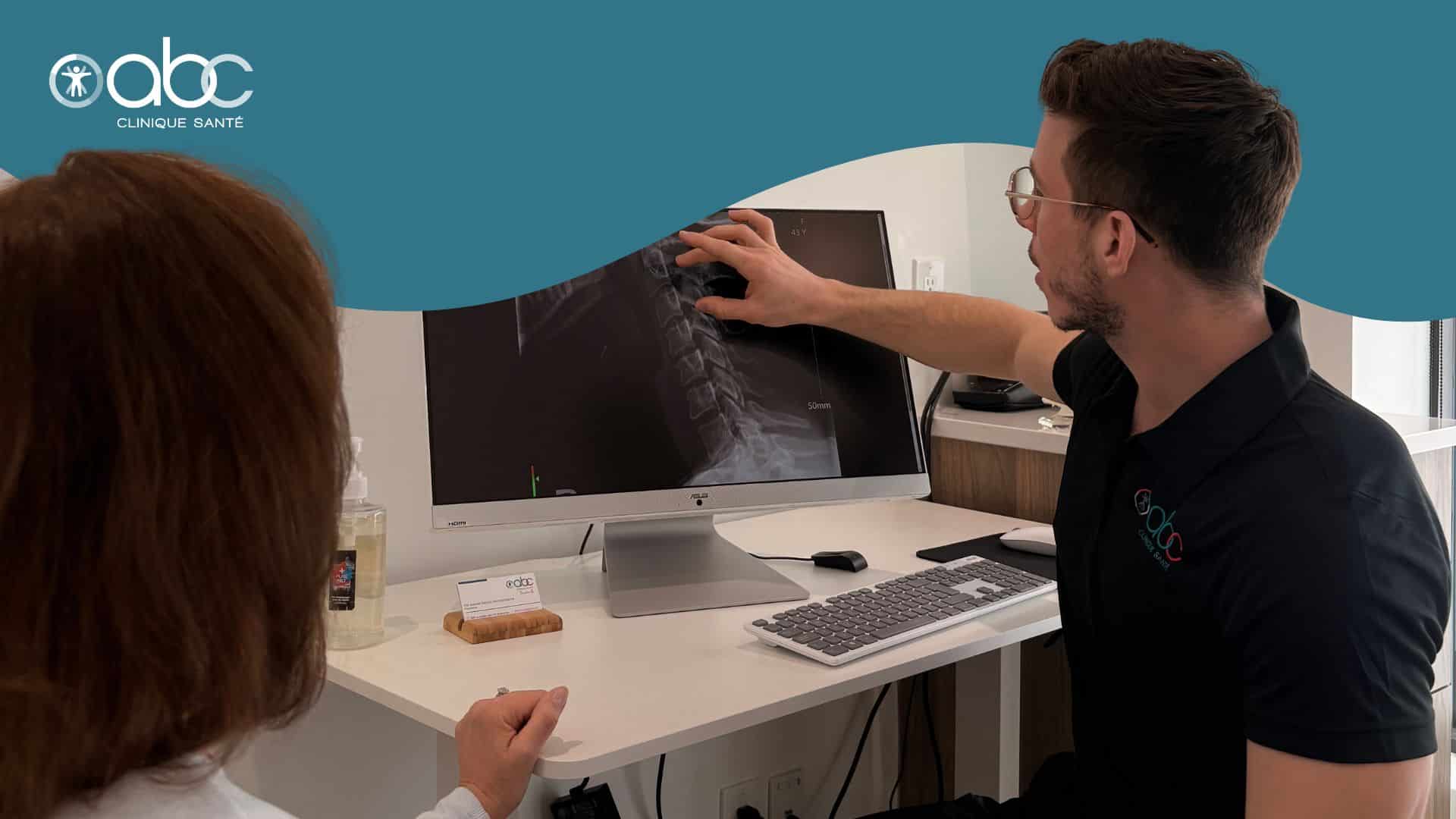
That’s why an image doesn’t tell the whole story. It must always be considered in the context of your symptoms and your clinical evaluation.
Stenosis
Stenosis refers to a narrowing of the space through which nerves pass. Certain changes in the spine can reduce this space. The nerve root may then become more sensitive or irritated. That said, having stenosis does not automatically mean you will experience pain. This is an important point to keep in mind when interpreting medical imaging.
What if it’s not sciatica?
This is probably one of the most important things to remember. Pain that radiates down the leg isn’t necessarily sciatica. In many cases, it may actually be referred pain.
Referred pain is felt in a location different from the structure causing it. Certain structures in the lower back—such as muscles, ligaments, or other tissues—can cause pain that is felt in the buttock or leg.
In other words, your leg may hurt even if the problem isn’t directly in your leg. That’s why it’s difficult to determine the cause of pain based solely on where it’s felt.
Is an MRI always necessary?
Not necessarily. For many cases of lower back pain, a clinical evaluation alone can provide a great deal of information. The healthcare professional can assess your range of motion, strength, sensitivity, and symptoms to better understand your condition.
An X-ray or MRI may be recommended when clinically indicated. However, it is not routinely necessary for all cases of lower back pain. Why? Because imaging can sometimes reveal changes that have been present for a long time and are not necessarily responsible for your symptoms.
So, seeing something on an image does not automatically mean that it is the cause of your pain.
When Should You Seek Medical Attention?
Do you have new lower back pain that radiates down your leg? Are you experiencing numbness, tingling, or a loss of strength? Are you simply unsure what’s causing your symptoms?
An evaluation can help you get a clearer picture. A healthcare professional can take the time to understand your situation, assess your symptoms, and determine the most appropriate approach for you. In many cases, conservative treatments such as chiropractic care or physiotherapy can help improve your symptoms and allow you to gradually resume your activities.
Are you concerned about a pain you’re experiencing? Schedule an appointment with our team. We’re here to help you get a clearer picture. 💙
-

Dr Jean-Christophe Moreau, chiropraticien
Chiropractor