
Running places constant demands on the muscles and joints of the lower body. With every stride, the hips play an essential role in allowing the legs to move, stabilizing the pelvis, and supporting the body’s movements.
Good hip mobility allows you to move through a wider range of motion, while proper muscular control helps you perform these movements with stability and precision. Incorporating a few targeted exercises into your routine can therefore be a great way to prepare your body for running and improve overall movement efficiency.
Here are five exercises to try to improve your hip mobility and control.
1. Hip Airplane (Single-Leg Hip Rotation)
The Hip Airplane is an exercise that combines mobility, balance, and stability. It involves performing a controlled rotation of the pelvis while balancing on one leg. It primarily targets the hip stabilizing muscles, particularly the glutes.
How to perform the exercise:
- Stand on one leg with your knee slightly bent.
- Lean your upper body forward while extending your free leg behind you, as if performing a single-leg deadlift.
- Keep your pelvis relatively stable, then rotate it to open the hip on the side of your free leg.
- Slowly reverse the movement to bring your pelvis back toward the floor.
- Repeat slowly, then switch legs.
Tip: Maintain your balance and avoid compensating by excessively twisting your back. You can lightly hold onto a wall or chair for support if needed.
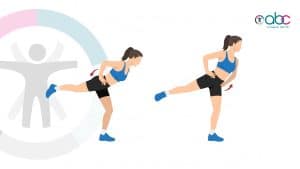
2. Hip CARs (Controlled Articular Rotations)
Hip CARs, or Controlled Articular Rotations, involve moving the hip joint through a wide range of motion slowly and with control. This exercise helps you explore the joint’s different directions of movement.
How to perform the exercise:
- Stand upright and hold onto a stable support to maintain your balance.
- Lift one knee toward your chest.
- Slowly move your knee outward while rotating your hip.
- Continue the movement by bringing your leg backward, without arching your lower back.
- Gradually return to the starting position.
- Perform a few repetitions, then switch sides.
Tip: Control is key to this exercise. Make smaller movements if needed, and avoid moving your pelvis or upper body to compensate for limited mobility.
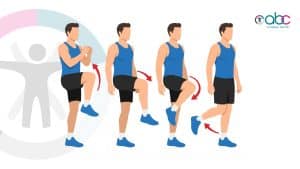
3. 90-90 Hip Switches
This exercise targets both internal and external hip rotation. It involves transitioning from a seated position with both knees bent at approximately 90 degrees to the opposite position, while maintaining control throughout the movement.
How to perform the exercise:
- Sit on the floor with your knees bent and your legs positioned in front of you.
- Position one leg in front of you and the other out to the side, with both knees bent at approximately 90 degrees.
- Keep your torso upright and your feet on the floor.
- Rotate both knees together toward the opposite side, passing through the center.
- Alternate from side to side in a smooth, controlled motion.
Tip: Try to keep both hips close to the floor as you transition. If the movement is challenging, use your hands for support to make the transition easier.
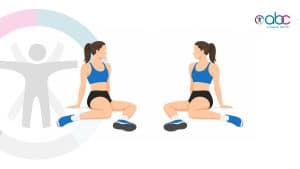
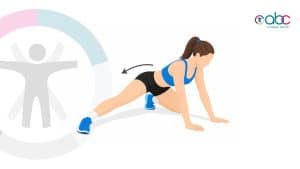
4. Adductor Rock Back (Adductor Mobility)
The adductors are the muscles located along the inner thighs. They play an important role in hip movement and leg stability. The Adductor Rock Back helps mobilize this area while also working on hip flexion.
How to perform the exercise:
- Start on all fours, with your hands directly under your shoulders and your knees under your hips.
- Extend one leg out to the side, keeping your foot firmly planted on the floor.
- Maintain a neutral spine and slowly push your hips backward toward the heel of your bent leg.
- Gradually return to the starting position.
- Repeat the movement, then switch legs.
Tip: Only move as far as you can while maintaining a comfortable stretch along your inner thigh. Avoid forcing the movement or allowing your lower back to round excessively.
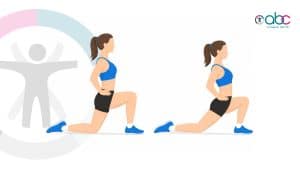
5. Hip Flexor Stretch
The hip flexors, including the psoas and rectus femoris, help bring the thigh toward the torso. The Hip Flexor Stretch targets these muscles and can be particularly beneficial for people who spend long periods sitting or want to improve their comfort and mobility during hip extension.
How to perform the exercise:
- Start in a half-kneeling lunge position, with one knee on the floor and the opposite foot placed in front of you.
- Keep your torso upright and gently engage your abdominal muscles.
- Slightly tilt your pelvis backward, as if drawing your belly button inward.
- Gently shift your hips forward until you feel a stretch at the front of the hip on the kneeling side.
- Hold the position for 20 to 30 seconds, then switch sides.
Tip: Avoid arching your lower back to deepen the stretch. Keep the movement gentle and controlled.
Incorporate these exercises into your running routine
These five exercises can be incorporated into your routine based on your needs and comfort level. Dynamic movements such as Hip CARs, 90-90 Hip Switches, and the Hip Airplane can be useful before a run to prepare your hips for movement. Static hip flexor stretches, on the other hand, may be better suited to a separate mobility routine or after your run.
Start with a few repetitions of each movement without trying to reach your maximum range of motion. Quality of movement is more important than quantity!
Looking for guidance tailored to your athletic needs?
A physiotherapist or one of our chiropractors at ABC Health Clinic can assess your mobility, strength, and individual needs to recommend exercises suited to your running routine. At ABC Health Clinic, our team is here to help you reach your athletic goals!
Visit the clinic nearest you :
-

Dre Alysia Lirette Parenteau, chiropractor
Chiropractor