
The arrival of a baby brings many new experiences, but also raises a number of questions. Among these, many parents wonder whether chiropractic care for their newborns can be beneficial, in what situations an evaluation is recommended, and, above all, whether such care is safe.
Why should you see a chiropractor with a newborn, and what signs should you watch for?
Birth is a major event for a baby’s body. During pregnancy, the baby adopts a specific position in the mother’s womb. During delivery, the baby is also subjected to several hours of contractions and, in some cases, the use of instruments such as forceps or a vacuum extractor. Even a cesarean delivery can be associated with certain strains that persist after birth.
These various situations can sometimes lead to discomfort or limited mobility in the infant. At home, certain behaviors may prompt parents to consider a chiropractic evaluation. For example, a baby may tend to always turn their head to the same side when sleeping. Some infants also experience difficulties with breastfeeding, colic, abdominal discomfort, or sleep disturbances.
The presence of one or more of these factors may warrant a thorough evaluation to better understand what is happening in the baby’s body.
What happens during the first consultation and treatment?
The initial assessment begins with a detailed discussion with the parents. The chiropractor seeks to understand the course of the pregnancy, the delivery, the first days of life, and the return home. The baby’s sleeping environment is also discussed, and depending on the situation, more specific questions may be asked regarding breastfeeding or bottle-feeding. When the baby is breastfed, various aspects may be explored, including the mother’s pain, uneven milk production, shallow latch, or the development of cracked nipples. All this information helps paint a comprehensive picture of the situation.
The consultation then continues with a neuromusculoskeletal physical examination to assess the baby’s entire body. If treatment is indicated, it differs significantly from that provided to adults. Since an infant’s body has characteristics specific to its development, the techniques used are extremely gentle. The pressure applied is comparable to that used to gently touch the baby’s eye.
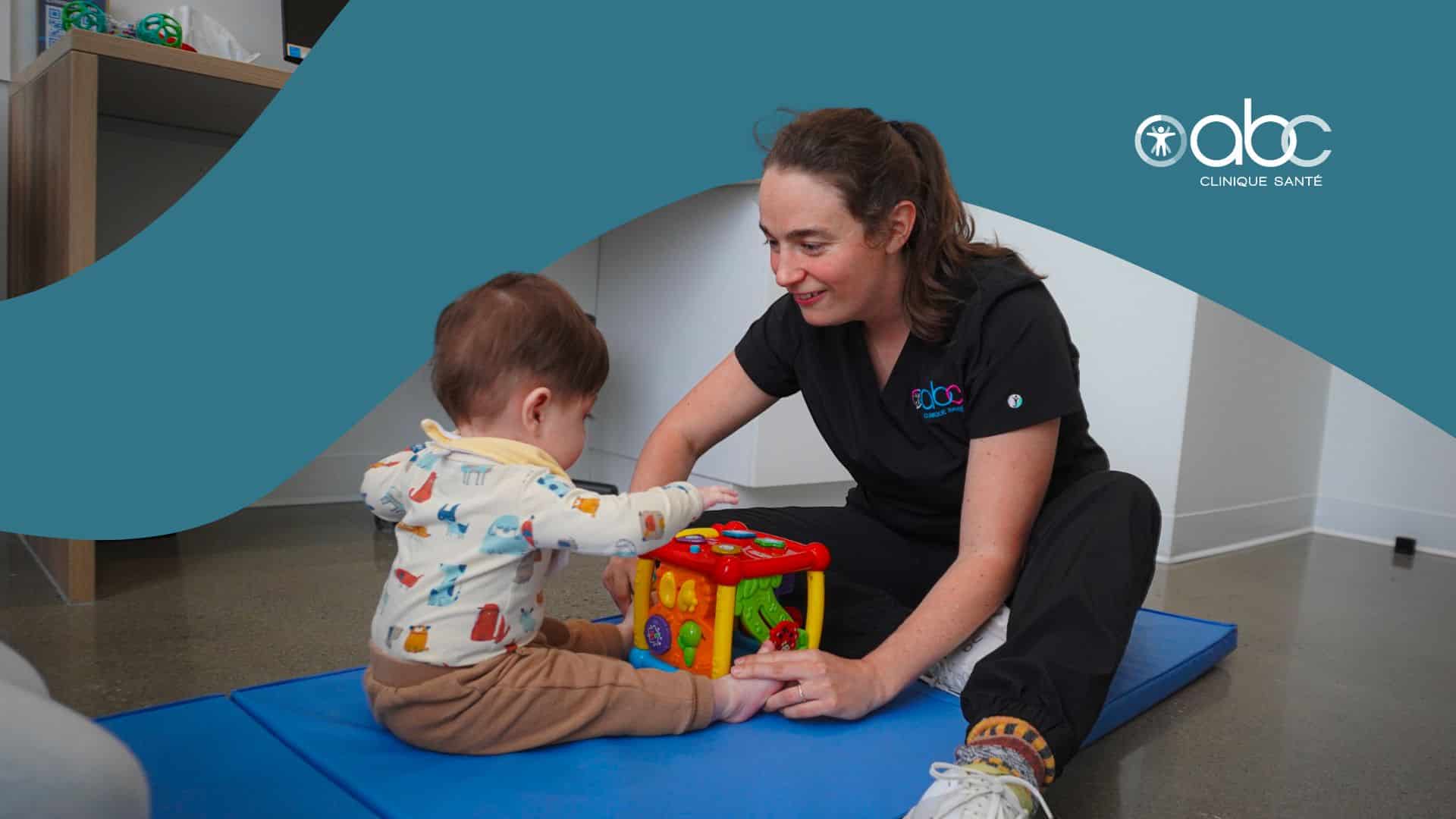
The goal is, in particular, to ensure the baby’s comfort while helping them stay calm and relaxed during the session. The care can be provided on the examination table using a cushion, but also in the parents’ arms, with mom lying down, or on mom or dad’s lap. Every effort is made to ensure that the baby feels safe in a reassuring environment.
The best care for your baby
Depending on the situation, chiropractic care can help improve various aspects of an infant’s daily life. Some parents notice improvements in sleep, a reduction in discomfort that lasts for several hours, or an easier breastfeeding experience when it has been difficult. Another important goal is to ensure that the baby’s neck and body have adequate mobility. Good mobility helps limit the onset or worsening of a head-positioning preference. This vigilance is important because a marked preference can potentially contribute to the development of plagiocephaly, or a flattening of the skull. By promoting optimal mobility, it is possible to take preventive action.
In short, every baby is unique, and every birth has its own context. When an infant shows a marked preference for turning their head to one side, experiences breastfeeding difficulties, colic, discomfort, or sleep disturbances, a chiropractic evaluation can help provide a better understanding of the situation. Using a gentle approach tailored to the needs of newborns and conducted in a safe environment, a chiropractor can support families in promoting the baby’s comfort and harmonious development. If you have questions about chiropractic care for your newborn, don’t hesitate to discuss them with a qualified healthcare professional.
Visit the clinic nearest you:
-

Dre Emy Vignola, chiropractor
Chiropractor