
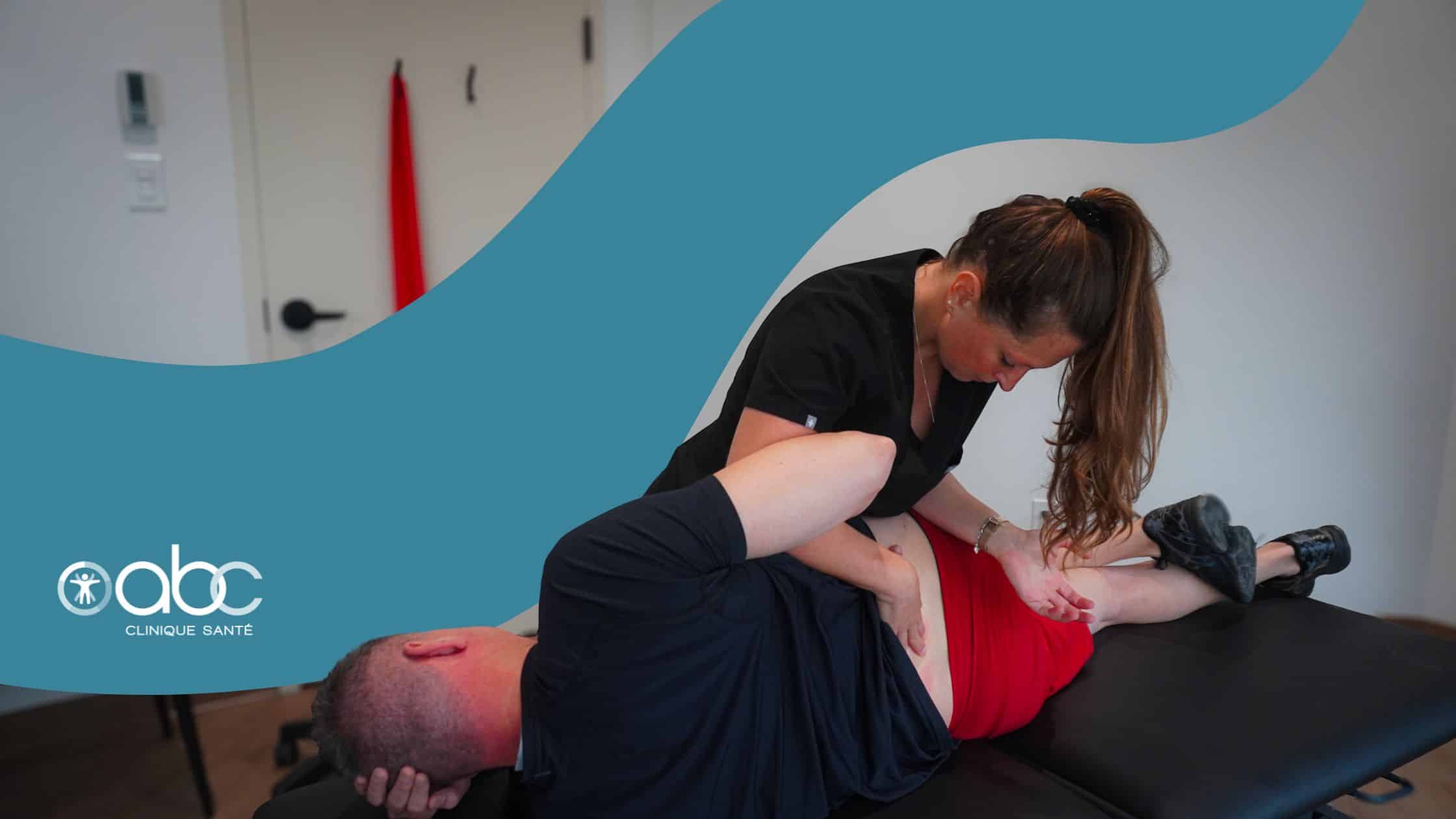
Even today, many myths circulate in the field of physiotherapy. Physiotherapists are often well-known healthcare professionals among the general public, but what about physiotherapy technologists? Here are three of the most common myths and facts about this profession, explained by Layla Benharbit Dufour, Physiotherapy Technologist at ABC Health Clinic Québec.
Three Common Myths About Physiotherapy
Myth 1: Physiotherapy technologists are not qualified enough to provide treatment compared to physiotherapists.
This is certainly one of the most common myths in physiotherapy. The truth? Physiotherapy technologists hold a college diploma (DEC), during which they acquire extensive knowledge of the human body as well as various treatment techniques to provide optimal care to their patients. Like physiotherapists, they are members of the Quebec Professional Order of Physiotherapy (OPPQ). They are also required to complete continuing education hours throughout their careers.
However, in order to provide care to patients, they must meet the necessary requirements under Regulation 94m. In private practice, an assessment conducted by a physiotherapist is therefore required to properly identify the health concern. Following this assessment, physiotherapy technologists may, based on the diagnostic hypothesis—which is not limited to the symptoms identified by the physiotherapist—as well as at least one problem from the list of problems established by the physiotherapist, provide care according to their clinical judgment throughout the rehabilitation process.
Myth 2: To ensure proper follow-up for my condition, I absolutely need to see a physiotherapist rather than a physiotherapy technologist.
This is another common misconception. Physiotherapy technologists are equally qualified to monitor your condition throughout your appointments and provide appropriate treatments and advice based on your needs.
The only reason a physiotherapist may need to reassess your file is if your condition worsens or if another condition needs to be addressed. In that case, a reassessment by the physiotherapist will be necessary to better understand your new needs.
The physiotherapist will generally transfer your care back to the physiotherapy technologist who has been following you since the beginning of your treatment so that they can continue the treatment plan and support your recovery.
Myth 3: Physiotherapy technologists only give patients exercises.
Many people believe that exercises are the only treatment modality offered by physiotherapy technologists. In reality, exercises are one treatment modality that helps you take an active and independent role in managing your condition while supporting optimal long-term rehabilitation.
Through their college education and additional postgraduate training, physiotherapy technologists can apply various targeted treatment techniques based on your needs and condition, such as manual therapy, education and advice, to help you achieve your goals.
The key takeaway is that you will generally be given exercises to support your rehabilitation, but follow-up appointments with a physiotherapy technologist are just as valuable. They allow certain aspects of your condition to be addressed that may not necessarily be possible to work on at home!
Complementary Professions
Although there are several myths surrounding the physiotherapy profession, the key takeaway from this blog is that physiotherapy technologists and physiotherapists are two distinct but complementary professions, much like nurses and physicians.
While their roles differ, both work toward the patient’s recovery by using thorough clinical judgment to address their needs and provide the best care for their condition.
Debunking these myths helps improve understanding of this valuable profession and highlights two roles that are both complementary and distinct.
Visit the clinic nearest you:
-

Layla Benharbit Dufour
Physiotherapy Technologist