
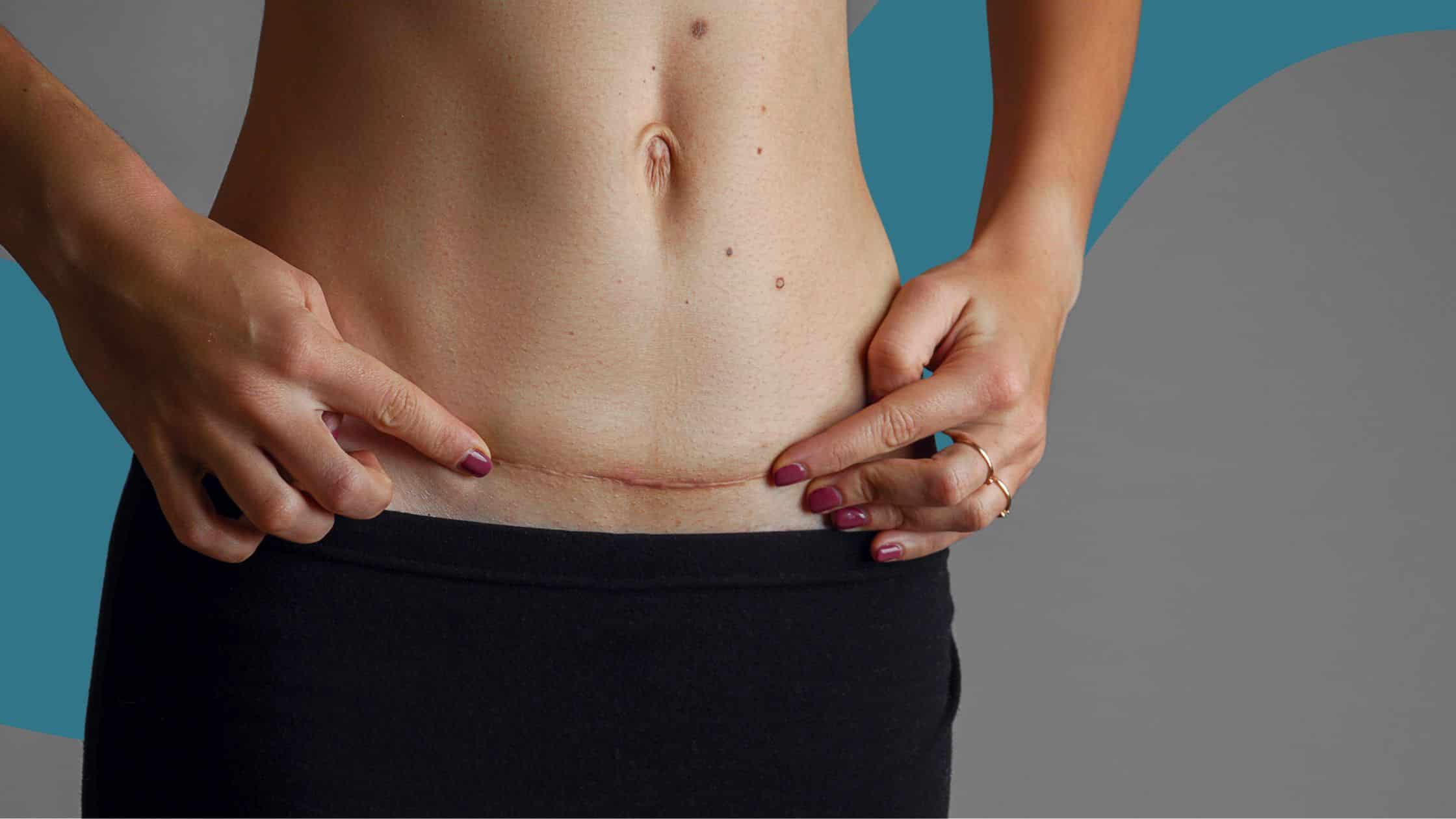
After a cesarean section, scar healing is not just about aesthetics. It plays a key role in a woman’s comfort, mobility, and overall health in the short, medium, and long term. However, many patients are not aware of the importance of caring for their scar, particularly through self-massage.
In osteopathy, this care is an integral part of the recovery process and can make a real difference in preventing complications.
Understanding Adhesions: An Often Underestimated Issue
When a surgical procedure such as a cesarean section is performed, the body naturally produces new tissue to repair the area. However, this process can lead to the formation of adhesions.
Adhesions occur when tissues “stick” together excessively: muscles, fascia, or even organs can lose their natural mobility. On palpation, they often manifest as small, harder, or tender areas around the scar.
Without intervention, these adhesions can persist for years and cause various discomforts.
Why massage your scar after a C-section?
Self-massage of the scar primarily helps limit the formation of adhesions, but its benefits go far beyond that.
A well-mobilized scar will be more flexible, less painful, and better integrated with the rest of the body. Conversely, a stiff scar can lead to:
- pain during sexual intercourse
- increased menstrual pain
- a feeling of tension or heaviness in the lower abdomen
- discomfort when resuming physical activity, even light exercise
These symptoms are primarily due to the loss of tissue mobility and the strain placed on the pelvic region, an area that is already under significant stress after pregnancy.
Recovery that requires time and consistency
Healing is a process that spans several months and involves different stages. To achieve optimal results, self-massage must be performed regularly and appropriately.
Even today, many women realize too late the impact of a poorly managed scar, sometimes several years after giving birth.
In the first few weeks after birth, daily life with a newborn can make it difficult to pay attention to the scar. Yet this period is crucial, particularly for monitoring signs of infection, which can go unnoticed.
The Role of Osteopathy in Scar Management
Osteopathic care relies on a collaborative effort between the patient and the practitioner.
At home, self-massage helps maintain tissue flexibility. In the clinic, the osteopath works to:
- assess the mobility of the scar and surrounding tissues
- restore the biomechanical balance of the pelvis and pelvic floor
- release muscle and ligament tension
- adapt the treatment based on the progress of scar healing
Each treatment plan is tailored to the individual, as every scar and every body reacts differently.
(Protocol developed through interdisciplinary collaboration, incorporating recommendations from physical therapists and physicians.)
Complementary techniques to optimize healing
In clinical practice, several approaches can be used to support the healing process:
- applying moisturizers (such as shea butter) to nourish the tissues
- using cupping to improve circulation and promote drainage
- applying kinesiology tape to support the scar and reduce tension
These techniques help improve scar quality, reduce discomfort, and promote better overall recovery.
An Essential Preventive Approach
Taking care of your scar from the very first weeks not only improves recovery but also helps prevent long-term pain.
A better understanding of the right steps to take, combined with professional guidance, empowers patients to take an active role in their recovery.
Visit the clinic nearest you:
- Osteopathy – Québec
- Osteopathy – Valleyfield
- Osteopathy – Vaudreuil-Dorion
- Osteopathy – Trois-Rivières
- Osteopathy – Boucherville
- Osteopathy – Mirabel
- Osteopathy – Gatineau
- Osteopathy – Sherbrooke
-

Cynthie Geron
Osteopath