You are about to schedule an appointment at ABC Health Clinic Vaudreuil-Dorion
Valleyfield: 450-371-0321
Vaudreuil-Dorion: 450-455-8500
Mirabel: 450-974-5928
Gatineau: 819-773-4230
Trois-Rivières: 819-801-1278
Boucherville: 450-356-1666
Virtual services : 450-455-8500 (1-866-222-6735)
Ultrasound
Ultrasound in podiatry
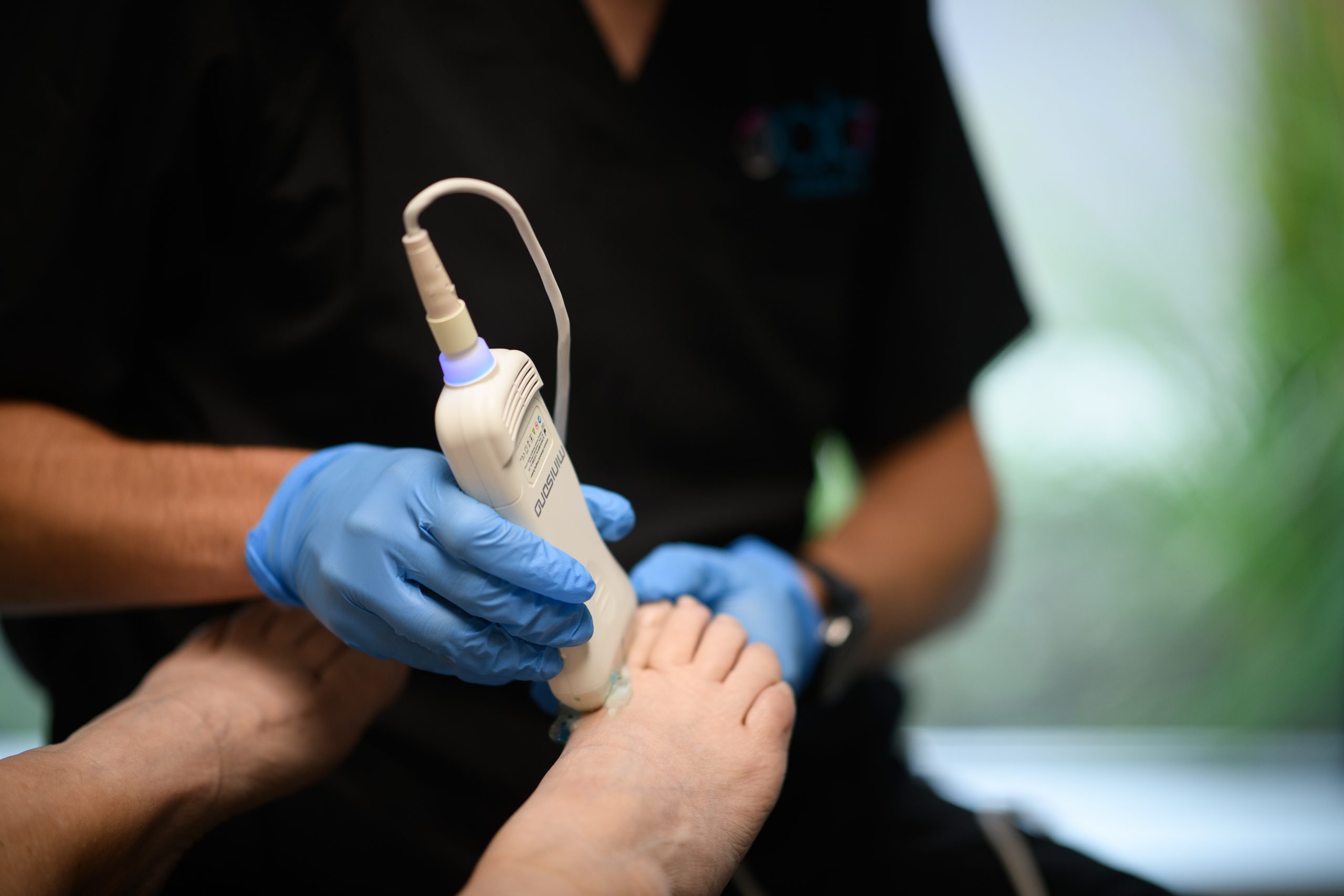
Ultrasound imaging in podiatry, also known as musculoskeletal ultrasound, plays a crucial role in the diagnosis and treatment of foot and ankle conditions. Using high-frequency sound waves, podiatrists can visualize the internal structures of the foot, such as tendons, ligaments, muscles, and joints, in real time to assess damage and abnormalities.
Tendinopathy
The tendons in the foot are often subject to injury and inflammation, known as tendinopathy. Ultrasound allows for a detailed assessment of the condition of the tendons, including their thickness, structure, and the detection of tears or calcifications. This accurate visualization guides treatment, which our podiatrists tailor to your needs, whether it involves rest, physical therapy, or corticosteroid injections.
Fasciopathy
Plantar fasciopathy is also known as heel spur or plantar fasciitis. It is a painful condition that affects the plantar fascia. Ultrasound can be used to identify areas of inflammation, thickening of the fascia, and any associated lesions. After the ultrasound, we tailor the treatment based on the results, which may include stretching, wearing a foot orthotic, etc.
Ligament injury
Ligament sprains are common in active patients and can cause joint instability and chronic pain. Using ultrasound, we assess the integrity of the ligaments and detect any tears or joint instability. It also guides the decision on the treatment plan, which may include rehabilitation, wearing a brace, or other measures.
Bursa
Next, bursae are small sacs filled with fluid located around the joints. They act as cushions to reduce friction and facilitate movement. When a bursa becomes inflamed, it can lead to bursitis, a painful condition that limits joint mobility. Ultrasound allows us to visualize the thickening of the bursa and the accumulation of inflammatory fluid. We can then continue treatment with anti-inflammatory medications, corticosteroid injections, etc.
In conclusion, ultrasound in podiatry offers a non-invasive and accurate method for evaluating foot and ankle conditions, allowing podiatrists to customize treatment for each patient, thereby improving clinical outcomes and quality of life. If you have any questions about ultrasound in podiatry or would like to schedule a consultation, please do not hesitate to contact us.